


HIPAA Compliant Hosting for Therapists and Mental Health Practices in 2026
HIPAA Compliant Hosting · https://hipaacomplianthosting.com/blog/hipaa-compliant-hosting-for-therapists
Last updated: June 18, 2026
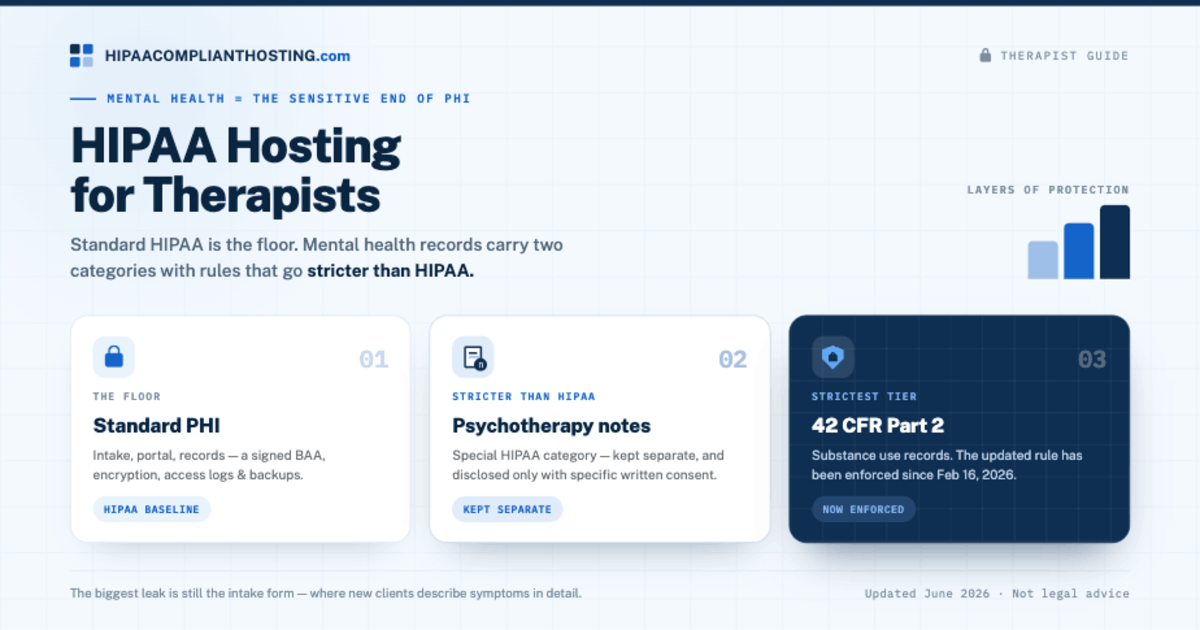
HIPAA compliant hosting for therapists protects mental health patient data under a signed Business Associate Agreement (BAA). It uses encryption, access controls, and audit logging. You need it for any site that collects intake details, runs a patient portal, or stores clinical records. Mental health data is among the most sensitive a website can hold, and it carries extra rules. Psychotherapy notes get special protection under HIPAA. Substance use records fall under stricter federal rules called 42 CFR Part 2. So a therapy practice site is not just another website. This guide explains when HIPAA applies to a therapist, the added protections for mental health data, and what the hosting has to do.
TL;DR: Quick answer
- A therapist who bills insurance electronically is a covered entity, so any site that collects health details needs HIPAA compliant hosting for therapists under a BAA.
- Psychotherapy notes are a special HIPAA category. They must be kept separate from the rest of the record and usually need specific patient permission to disclose.
- Substance use disorder records fall under 42 CFR Part 2, which is stricter than HIPAA. Its updated rule has been enforced since February 16, 2026.
- The biggest leaks are sensitive intake forms and plaintext notification emails, because mental health intake invites people to describe symptoms in detail.
- If the practice offers virtual sessions, the telehealth tool and the hosting behind it both need a BAA.
Are therapists and mental health practices covered by HIPAA?
Usually yes. A therapist becomes a covered entity by sending health information electronically in a standard transaction. In plain terms, that means billing insurance electronically, on your own or through a billing service. A solo counselor who files electronic claims is covered, the same as a large group practice. A strictly cash-pay therapist who never sends PHI electronically may fall outside HIPAA. That is rarer than it sounds. And state confidentiality laws and ethics rules still apply either way. The line for non-clinical roles is drawn in our guide to whether HIPAA applies to coaches and cash-only practitioners. For most billing practices, the website is in scope, and HIPAA compliant hosting for therapists is the baseline. Naturopathic practices have their own edge cases, covered in does HIPAA apply to naturopathic doctors. For the wider group of alternative practitioners, see HIPAA alternative health practitioners.
Why mental health data needs extra care
All PHI is protected, but mental health data sits at the sensitive end. A diagnosis, a medication, or even the fact that someone is seeking therapy can cause real harm if it leaks. Regulators treat parts of it as a special category, and patients expect more. That raises the stakes for every place the data lives: the intake form, the database, the notes, and the backups. Two categories deserve a closer look.
Psychotherapy notes
HIPAA gives psychotherapy notes their own status. These are the notes a clinician keeps to analyze a counseling session. They are held apart from the rest of the record, and they are not the same as progress notes. Because they are so sensitive, most uses and disclosures need the patient's specific written permission. The general consent that covers treatment and billing is not enough. For hosting, the point is simple. If these notes live on or near your website, that storage must be locked down: encrypted, access-controlled, and kept apart from general records.
Substance use records and 42 CFR Part 2
Some practices treat substance use disorders in a federally assisted program. Those records fall under 42 CFR Part 2, a rule that has long been stricter than HIPAA. A 2024 final rule brought Part 2 closer to HIPAA. It also added protection for substance use counseling notes, much like psychotherapy notes. Enforcement of the updated rule began February 16, 2026. The takeaway is simple. If you touch substance use treatment, ordinary HIPAA hosting is the floor, not the ceiling, and consent and disclosure need extra care.
What a mental health practice website needs
The rules above all point to the same infrastructure. HIPAA compliant hosting for therapists has to deliver:
- A signed BAA with the host under 45 CFR § 164.308(b), before any patient data lands on the site.
- Encryption in transit and at rest, so intake details and notes are unreadable if stolen.
- Access controls and audit logs that record who opened what, which matters more when the data is this sensitive.
- Encrypted, tested backups, because losing records is its own kind of harm.
- Isolation from other customers, so a neighbor's breach is not yours.
The full control list, mapped to the rules, is in our complete guide to HIPAA-compliant hosting. Most therapy sites run on WordPress, where the host has to supply what the platform does not; see HIPAA WordPress hosting requirements. The general practice-website checklist in medical website hosting applies to therapy sites too.
The intake form is the most common leak
Mental health intake is where data leaks most often, because the form invites detail. A new client types out symptoms, history, and what they are struggling with. That submission is ePHI the moment it arrives. Two things have to be true. The form tool must sign a BAA and encrypt the data. And the notification must not email those details in plaintext to a personal inbox. We cover the form side in HIPAA compliant forms, and the therapist-specific version in are therapist contact form submissions regulated by HIPAA. The booking and scheduling tool a client uses to request an appointment sits in the same chain; see is Calendly HIPAA compliant. The safest design collects only what you need to make contact and saves the clinical detail for the first secure session. Practices that treat adolescents also need the consent rules in minors sign HIPAA forms.
If you offer virtual therapy
Teletherapy is now standard, and it has its own rules. The video tool must sign a BAA on the right plan. Any recording is ePHI. It needs encrypted, BAA-covered storage, never a personal cloud account. The consent and retention rules for recorded sessions are in our guide to HIPAA compliant video recording. The COVID-era flexibility that let providers use any video app ended in 2023. So every virtual session must meet the full Security Rule today. The details are in HIPAA compliant telehealth. The plan-by-plan answer for the most common video tool is in is Zoom HIPAA compliant. Our comparison of HIPAA compliant video conferencing covers every mainstream platform that signs a BAA, including the one free option. Picking the visit tool itself is covered in our HIPAA compliant telehealth platform comparison. The video tool covers the call. HIPAA compliant hosting for therapists still has to cover the portal, the notes, and the recordings. If you want a client portal on your own site, the build is covered in our HIPAA compliant patient portal guide.
If you would rather hand the infrastructure to a healthcare host
Running a practice is demanding enough without managing servers and tracking three sets of rules. A host built for healthcare can own the BAA, the encryption, and the safeguards, so your attention stays on clients. Our healthcare hosting provides single-tenant, BAA-covered environments for behavioral and mental health practices. Each one includes encryption, a web application firewall, audit logging, and encrypted backups, plus 4 hours of migration and configuration for your existing site. We sell this service, so weigh that as a disclosure. We also say plainly when keeping a clean marketing site simple and moving only the patient-data parts is the smarter path. If you want HIPAA compliant hosting for therapists without the setup work, tell us what your site collects and we will give you a straight read.
Frequently asked questions
Does a therapist website need HIPAA compliant hosting?
Yes, if the therapist bills insurance electronically and the site collects any health details through forms, a portal, or uploads. A phone-number-only marketing site with no patient data generally does not need HIPAA compliant hosting for therapists.
Are psychotherapy notes treated differently under HIPAA?
Yes. Psychotherapy notes are a special category kept separate from the rest of the record. Most uses or disclosures need the patient's specific permission, not general consent. Wherever they are stored must be tightly secured.
What is 42 CFR Part 2, and does it apply to my practice?
It is a stricter federal rule for substance use disorder records held by federally assisted programs. A 2024 final rule aligned it more closely with HIPAA, with enforcement beginning February 16, 2026. If you treat substance use, it likely applies on top of HIPAA.
Is teletherapy HIPAA compliant?
Only when the video tool signs a BAA on a healthcare plan, the session is encrypted, and any recording is stored in BAA-covered encrypted storage. The hosting behind your portal and notes must be compliant too.
Can a therapist use a regular contact form on the website?
Only if it collects no health details, or the form tool signs a BAA, encrypts submissions, and does not email them in plaintext. Mental health intake forms invite sensitive detail, so they need the protected setup.
Recap: HIPAA compliant hosting for therapists
To recap, HIPAA compliant hosting for therapists protects mental health patient data under a BAA, with encryption, access controls, logging, and backups. Mental health data carries extra weight. Psychotherapy notes are a special HIPAA category, and substance use records fall under stricter 42 CFR Part 2, now enforced. Lock down the intake form, protect any teletherapy recordings, keep notes encrypted and separate, and host the patient-data parts of the site with a provider built for healthcare.
This article is general information, not legal advice. Whether HIPAA, state law, or 42 CFR Part 2 applies to your practice is fact-specific; confirm with qualified counsel and base your safeguards on a documented risk analysis. Reviewed June 2026.
Sources
- HHS: 42 CFR Part 2 Final Rule fact sheet
- 45 CFR § 164.508 (uses and disclosures requiring authorization, incl. psychotherapy notes): ecfr.gov
- 45 CFR § 164.308 (administrative safeguards, BAA requirement): ecfr.gov
- HHS: Business Associates guidance